
Foster Feeding Guide – Puppy Edition

Caring for puppies in foster is incredibly rewarding—and feeding them correctly is one of the most important ways you help them thrive. Puppies’ nutritional needs change quickly, so this guide walks you through what to feed, how often, and what to watch for as puppies grow from newborns to solid-food eaters.
🍼 Newborn Puppies (0–2 Weeks)
Primary Nutrition: Puppy milk replacer (formula)
How Often: Every 2–3 hours, including overnight
Feeding Notes:
Use commercial puppy milk replacer only (never cow’s milk)
Feed puppies on their bellies—never on their backs
Allow puppies to nurse at their own pace; do not squeeze the bottle
After every feeding, gently stimulate to help them urinate and defecate
Never microwave bottles containing formula. Instead, heat a container of water separately and place the bottle inside it to warm gradually.
What to Watch For:
Daily weight gain (this is critical)
Warm bodies and strong suckling
🍼➡️🥣 Transitional Puppies (2–4 Weeks)
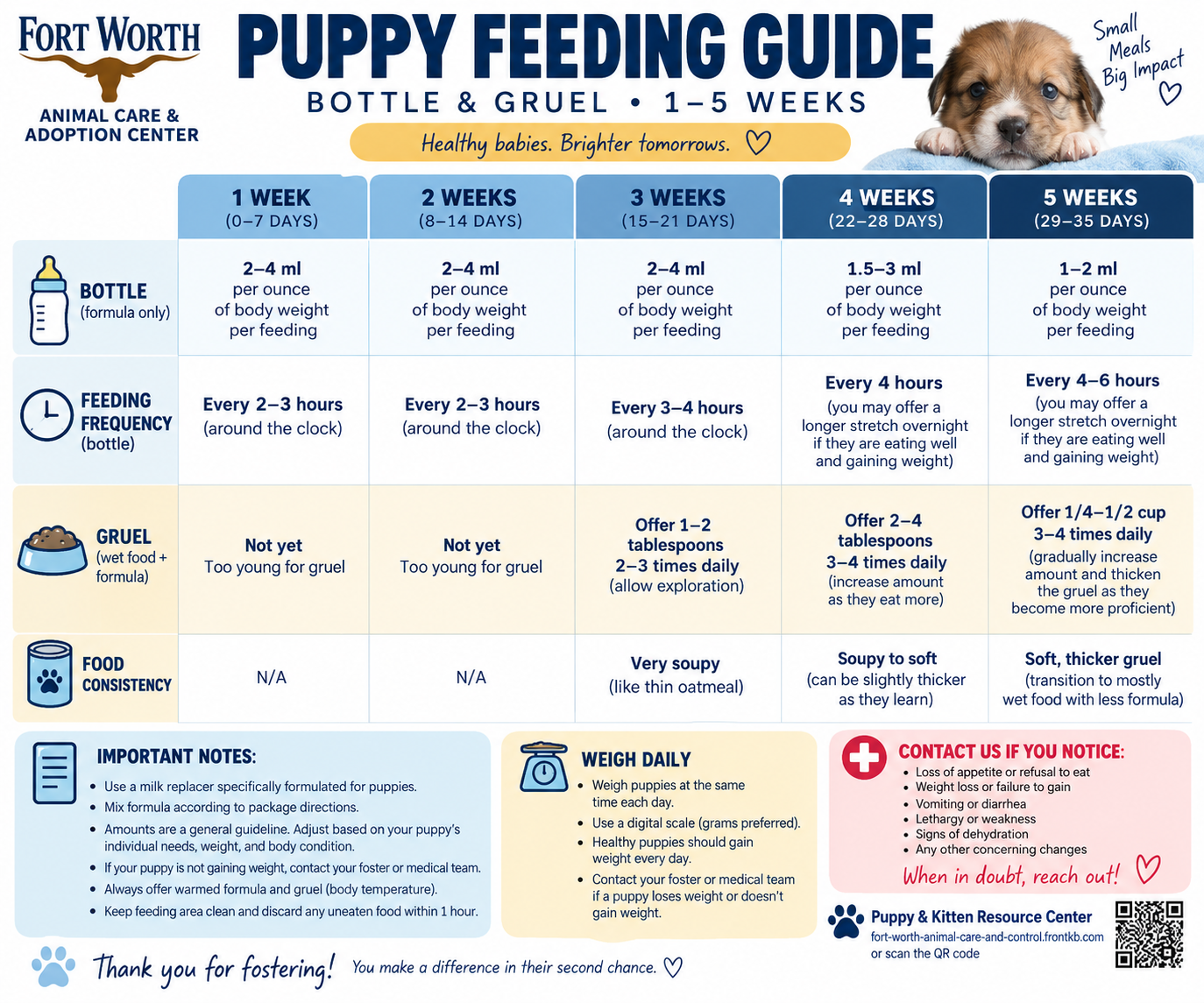
Primary Nutrition: Bottle feeding + introduction to gruel
How Often:
Bottle feeding every 3–4 hours
Offer gruel 1–2 times daily
What Is Gruel?
Puppy kibble soaked in warm water or puppy formula
Blended to a soupy, smooth consistency
Feeding Notes:
Puppies may step in or play with food—this is normal
Bottle feeding should continue to ensure proper nutrition
This stage is about exposure, not full weaning
🥣 Weaning Puppies (4–6 Weeks)
Primary Nutrition: Gruel
How Often: 4 meals per day
Feeding Notes:
Gradually thicken gruel by reducing liquid
Puppies should be lapping and starting to chew
Bottle feeding is reduced and usually discontinued by the end of this stage
Provide shallow bowls of fresh water
What to Watch For:
Consistent eating on their own
Normal stools during food transitions
🦴 Young Puppies (6–8 Weeks)
Primary Nutrition: Solid puppy food
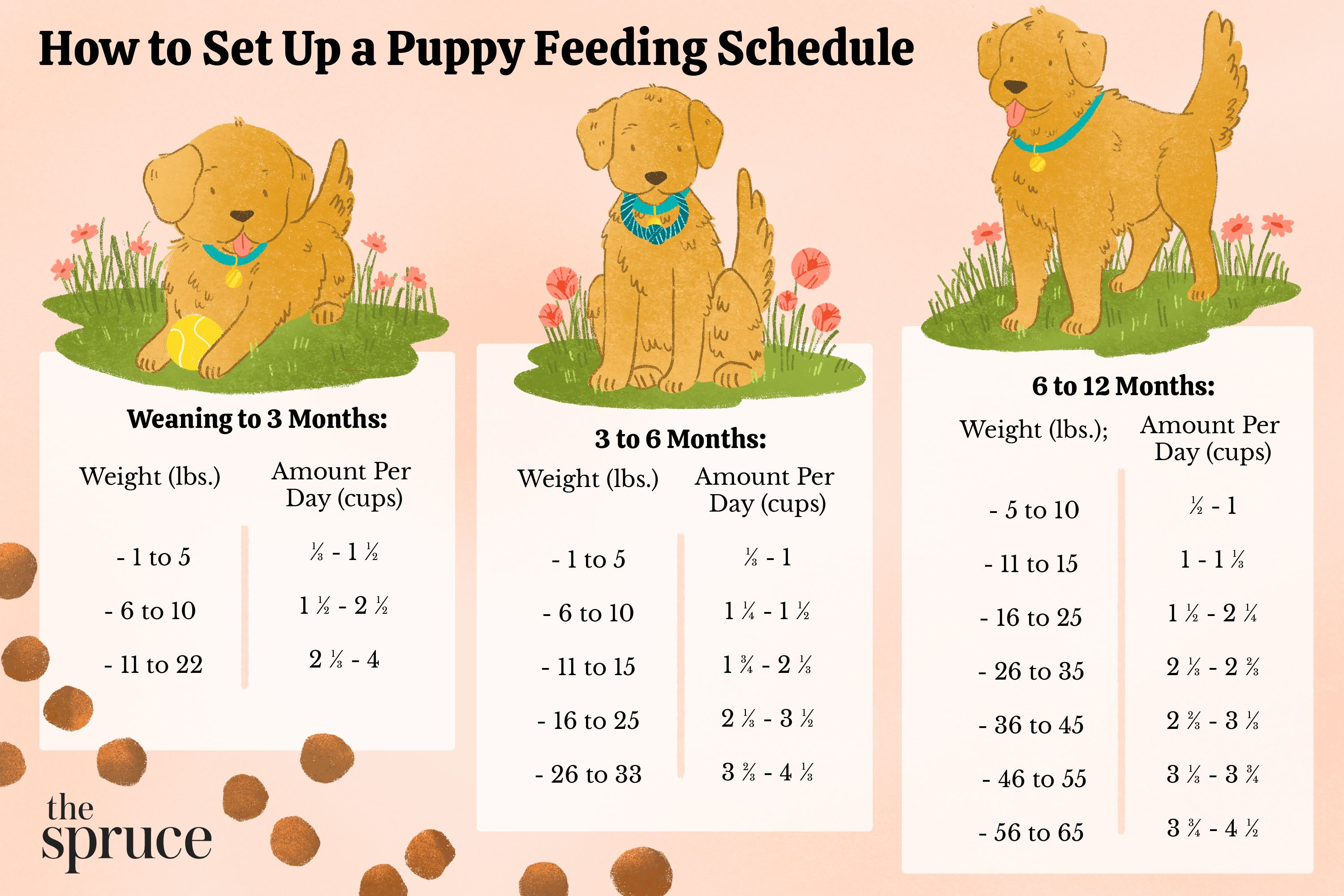
How Often: 3–4 meals per day
Feeding Notes:
Use age-appropriate puppy kibble
Kibble can be moistened with water if needed
Avoid sudden food changes to prevent diarrhea
Ready for Adoption:
Fully weaned
Eating independently
Maintaining healthy weight and energy
🚨 Important Foster Feeding Reminders
Always use puppy-specific food and formula
Clean bottles, bowls, and feeding areas after every use
Monitor weight, appetite, hydration, and stool daily
Contact the foster team immediately if a puppy:
Refuses food
Has persistent diarrhea or vomiting
Is losing weight or failing to gain
❤️ Thank You for Fostering
Feeding puppies through these early stages takes time, patience, and dedication. Your care directly impacts their survival, growth, and future success in a forever home. We are so grateful for everything you do to give these puppies the best possible start.
If you have any questions about feeding schedules or transitions, please reach out to the foster team—we’re here to help every step of the way.